Introduction
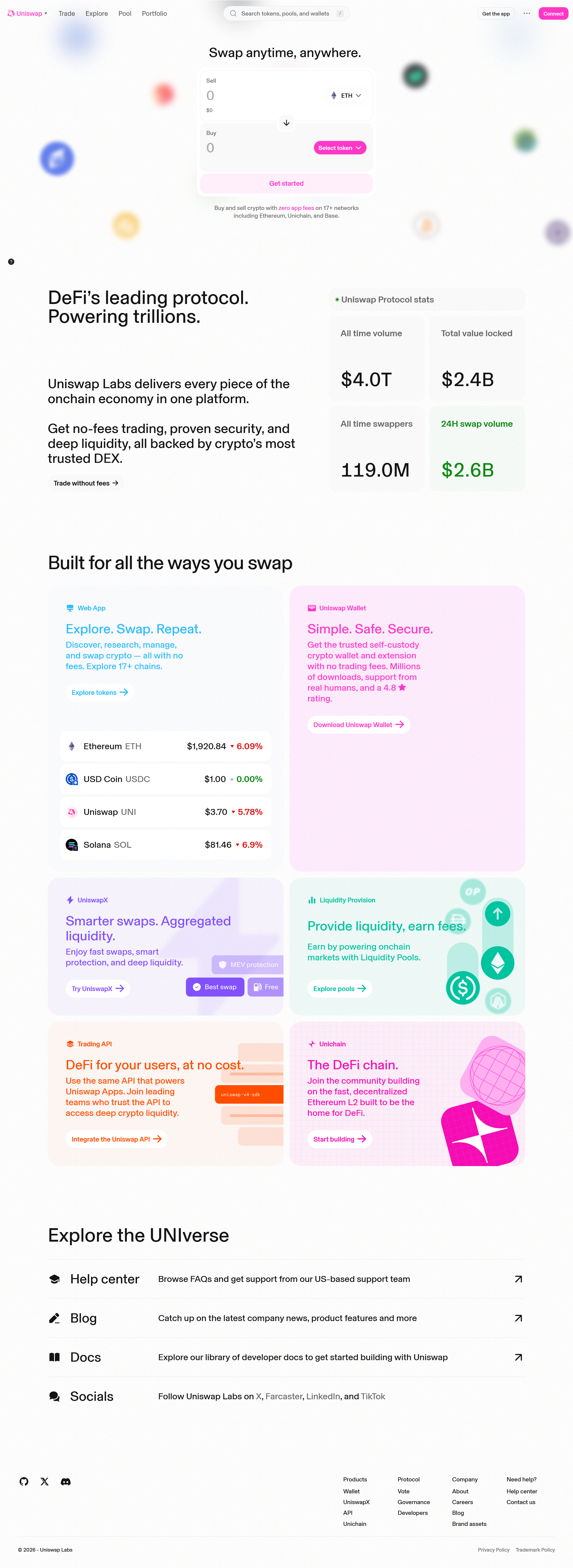
The rise of decentralized finance (DeFi) has fundamentally reshaped the traditional financial ecosystem. At the heart of this transformation lies Uniswap, one of the most prominent and widely used decentralized exchanges (DEXs). Since its inception in 2018, Uniswap has empowered users to trade cryptocurrencies without the need for intermediaries like centralized exchanges. In this article, we will explore how Uniswap works, its impact on the DeFi ecosystem, and the innovative features that have made it one of the most popular platforms in the space.
What is Uniswap ?
Uniswap is a decentralized exchange (DEX) built on the Ethereum blockchain that facilitates peer-to-peer trading of tokens. Unlike traditional centralized exchanges like Binance or Coinbase, Uniswap does not rely on order books or matching buyers and sellers. Instead, it uses an automated market maker (AMM) system, which allows users to trade tokens directly with liquidity pools.
In simple terms, a liquidity pool is a collection of two or more assets locked in a smart contract. Users can contribute liquidity to these pools and, in return, earn a share of the fees generated from trades that occur in the pool. This mechanism provides a more efficient, decentralized, and transparent alternative to traditional exchanges.
Key Features of Uniswap
1. Automated Market Maker (AMM):
The AMM is the core innovation behind Uniswap functionality. Rather than using an order book where buyers and sellers place orders and wait for matches, Uniswap’s AMM uses mathematical formulas to automatically determine the price of tokens based on the available liquidity in the pool. The most common formula used by Uniswap is the Constant Product Market Maker (CPMM), which ensures that the product of the two token balances in a pool remains constant.
2. Liquidity Pools:
Liquidity pools are collections of funds provided by users (liquidity providers) that enable the exchange of tokens without the need for a central authority. These pools are typically composed of two different tokens, such as ETH and DAI, and are used to facilitate trades. Liquidity providers earn a portion of the transaction fees based on their share of the pool.
3. No Middleman or Custody:
One of the most significant benefits of Uniswap is that it is fully decentralized. Users retain control over their funds at all times, and transactions occur directly on the blockchain. This eliminates the need for centralized intermediaries like exchanges, which can be prone to hacks, downtime, and regulatory issues.
4. Token Listings and Accessibility:
Uniswap allows anyone to list a new token, provided that they can create a liquidity pool for it. This openness has led to a rapid expansion of the number of tokens available for trading on the platform, enabling users to trade thousands of different assets. Moreover, because it is decentralized, there are no restrictions on access, making it available to anyone with an internet connection.
5. Yield Farming and Staking:
Uniswap has become an essential platform for yield farming — a practice where users earn additional rewards by staking or providing liquidity. Liquidity providers receive LP tokens in exchange for supplying liquidity. These tokens can then be used to stake in other DeFi protocols or redeem rewards from Uniswap.
6. Governance via UNI Token:
Uniswap native governance token, UNI, allows users to participate in the governance of the protocol. UNI token holders can vote on proposals, such as protocol upgrades, fee adjustments, and the distribution of incentives. This decentralized governance model ensures that Uniswap remains community-driven.
How Does Uniswap Work?
Uniswap operates on the Ethereum blockchain and uses smart contracts to execute trades. To understand how it works, it’s essential to break down the process:
1. Liquidity Providers (LPs) Supply Tokens:
Users provide liquidity by depositing equal values of two tokens (for example, ETH and USDC) into a liquidity pool. In return, they receive LP tokens that represent their share of the pool.
2. Swapping Tokens:
When a user wants to swap one token for another, they interact with the Uniswap protocol. The protocol calculates the price of the token based on the current ratio of tokens in the pool. Users then make the trade directly with the pool, not with other users.
3. Price Determination:
Uniswap uses the constant product formula to determine the price of tokens. The formula is:
𝑥 x y = 𝑘
Where:
x and y represent the amounts of the two tokens in the pool.
k is a constant that ensures the value of the pool remains balanced.
When someone swaps tokens, the ratio of tokens in the pool changes, which results in a price adjustment. The more a token is traded, the more its price moves relative to the other token.
4. Fees and Rewards:
Uniswap charges a small fee (typically 0.3%) on each trade. This fee is distributed to liquidity providers based on their share of the pool. For example, if you provide 10% of the liquidity in a pool, you earn 10% of the fees.
The Rise of Uniswap and Its Impact on DeFi
Uniswap has played a central role in the growth of decentralized finance (DeFi). It was one of the first platforms to offer decentralized token swaps without requiring users to trust a centralized exchange. As a result, it has become a critical component of the DeFi ecosystem, enabling users to trade, stake, and earn rewards in a decentralized and permissionless environment.
The launch of Uniswap V2 in 2020 introduced several key improvements, including support for ERC-20/ERC-20 token pairs (in addition to ETH/ERC-20 pairs), price oracles, and more efficient routing for trades. The introduction of Uniswap V3 in May 2021 further enhanced the protocol with features like concentrated liquidity, multiple fee tiers, and improved capital efficiency, allowing liquidity providers to customize their positions and earn higher returns.
Uniswap influence is not limited to token swaps and liquidity provision. It has spurred the development of many other DeFi projects and protocols, including yield farming platforms, synthetic asset platforms, and decentralized lending platforms. By enabling users to easily trade and provide liquidity, Uniswap has become a building block for the broader DeFi ecosystem.
Risks and Challenges
Uniswap offers numerous advantages, it’s essential to be aware of the risks involved:
1. Impermanent Loss:
Impermanent loss occurs when the price of the tokens in a liquidity pool changes relative to each other. If the price disparity becomes significant, liquidity providers may suffer losses compared to just holding the tokens outside the pool. However, fees earned from trades can help mitigate this risk.
2. Smart Contract Risks:
As with any blockchain-based protocol, Uniswap is subject to potential bugs or vulnerabilities in its smart contracts. Though Uniswap's code has been extensively audited, vulnerabilities can still exist.
3. Scalability Issues:
Uniswap relies on the Ethereum network, which has faced scalability challenges, particularly during periods of high demand. High gas fees and network congestion can make using Uniswap costly and inefficient for smaller traders.
Conclusion
Uniswap has proven itself to be one of the most successful and innovative decentralized exchanges in the cryptocurrency space. Its AMM model has revolutionized the way users trade and provide liquidity, fostering a more decentralized and open financial system. As DeFi continues to evolve, Uniswap will likely remain a key player in the space, driving further advancements in decentralized finance.
However, while it offers tremendous benefits, users should remain mindful of the associated risks, such as impermanent loss and smart contract vulnerabilities. With ongoing improvements to its protocol and the broader Ethereum network, Uniswap is poised to continue its growth and remain at the forefront of the DeFi revolution.

Drag & Drop Website Builder